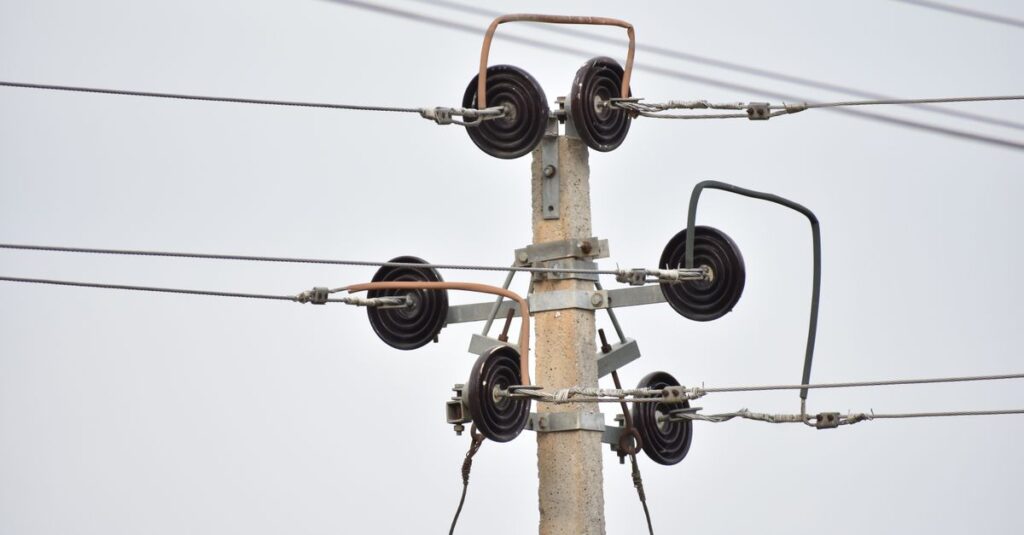
Copper phone lines were built to sit quietly in the background for decades. That is exactly why a POTS line replacement can become urgent: the lines behind fire panels, elevator phones, gates, fax machines, and legacy devices are often discovered only when service costs rise or a carrier announces a retirement date.
For a business, this is not simply a phone-system upgrade. It is a continuity project. The right approach protects life-safety communications, keeps locations operating, and replaces aging analog dependencies with services your team can manage with more visibility and less uncertainty.
Why POTS lines are becoming a business risk
POTS, or Plain Old Telephone Service, is traditional analog phone service delivered over copper infrastructure. Carriers across the United States are retiring or changing support for copper networks as they move resources toward fiber, wireless, and IP-based services. In many markets, the result is higher monthly charges, fewer repair options, longer replacement timelines, and limited ability to order new analog lines.
The operational issue is rarely the desk phone. Most businesses have already moved employee calling to cloud VoIP or mobile devices. The challenge is the equipment that still expects an analog dial tone: a fire alarm communicator, an elevator emergency phone, a building access controller, a security system, a postage meter, or a fax workflow that has not been redesigned.
Leaving these devices on aging lines may feel safer because they have worked for years. But a line that is expensive, difficult to repair, or unsupported in the future is not a dependable long-term plan. A planned replacement gives your organization time to validate compatibility, coordinate with vendors, and maintain service through the transition.
Start POTS line replacement with a complete inventory
The most costly failures happen when teams replace the lines they know about and overlook the ones embedded in a closet, elevator equipment room, or remote site. Begin with every analog circuit on the account, then match each billing number to the physical device and location it supports.
For each line, document the device type, manufacturer and model, physical location, current carrier, monthly cost, call behavior, and the business consequence if it cannot place a call. Ask who maintains the connected equipment. The phone provider may not manage the alarm panel, elevator controller, gate, or fax machine, so those vendors need to be part of the plan.
This inventory also reveals opportunities to retire lines entirely. A break-room fax line may no longer be necessary if teams can use virtual fax. A standalone conference phone may be replaced by a cloud meeting room device. The goal is not to convert every analog line one-for-one. It is to choose the most appropriate communication method for each function.
Classify devices by risk, not by convenience
A useful way to prioritize is to separate devices into three groups. Life-safety and emergency devices come first, including fire alarm communications and elevator phones. Business-critical devices come next, such as security systems, point-of-sale terminals, access control, and essential fax processes. Low-risk or obsolete lines can be retired or moved later.
This classification determines testing depth, backup requirements, and who must approve the change. A line supporting a fire panel cannot be treated like a standard office phone number. Requirements can vary by equipment, local authority, monitoring company, building owner, and applicable code. Confirm the approved communication path with the fire alarm vendor and the authority having jurisdiction before scheduling a cutover.
Choose the replacement technology by use case
There is no single replacement for every POTS line. Cloud VoIP is a strong fit for business calling, virtual fax, auto attendants, team messaging, and customer service workflows. It gives employees flexibility and brings calls, texts, voicemail, and customer context into one managed platform.
Legacy analog devices often need a different approach. A managed analog-to-IP gateway can provide dial tone to compatible equipment over an internet connection. Cellular POTS replacement devices use wireless service as the primary path or backup path, which can be valuable for remote locations and devices where a separate connection adds resilience. Some modern alarm and access-control systems can communicate directly over cellular or IP, eliminating the analog interface altogether.
The best option depends on what the device sends, how often it calls, whether it requires a specific signaling format, and what happens during an internet or power outage. Fax machines, for example, can be sensitive to packet loss and protocol differences. A virtual fax service may be cleaner than trying to preserve an aging machine. Elevator phones need reliable emergency calling and accurate location information. Fire communicators need approved equipment and monitoring compatibility, not just a dial tone.
Design for power and network failure
Traditional copper lines often supplied power from the carrier network. IP and cellular replacements depend on local equipment, power, and sometimes the building internet connection. That does not make them less reliable, but it does change the design responsibility.
For critical devices, identify every dependency: the gateway or cellular unit, router, switch, modem, broadband circuit, and electrical outlet. Use battery backup or an uninterruptible power supply where appropriate, and confirm how long it will support the device during an outage. Consider a cellular backup path when a single internet connection would create unacceptable exposure.
Also verify emergency calling behavior. If a device calls 911, the dispatcher needs usable location information. Test the actual call path, not only whether the device gets dial tone. For multi-location organizations, document the address and suite, floor, or elevator location associated with each emergency device.
Build a cutover plan that keeps service active
A dependable migration is staged. Install and configure the new service before disconnecting the old analog line whenever possible. Coordinate the carrier, communications provider, equipment vendor, monitoring company, and site contact around a single cutover window and clear ownership.
Before the switch, test routine and failure scenarios. Place inbound and outbound calls where applicable. Confirm alarm signals reach the monitoring center. Test elevator emergency calls from the cab. Send and receive fax documents if fax remains in use. Verify that access-control or security equipment reports properly. Then test what happens if primary internet or facility power is interrupted.
Keep evidence of each test, including time, result, contact names, and any corrective action. This is especially useful for regulated environments, property managers, and organizations with multiple sites. It also prevents a common problem: a project is marked complete after installation, even though the connected device was never tested end to end.
Do not cancel the old line until the replacement has passed agreed acceptance tests. In some cases, a brief overlap is worth the added cost because it provides a practical rollback option. The trade-off is simple: a few weeks of duplicate service can be far less expensive than losing alarm monitoring, emergency calling, or a revenue-critical device.
Bring communications into a more manageable model
POTS replacement is often the first step toward cleaning up a fragmented communications environment. Once legacy lines are identified, businesses can consolidate employee calling, messaging, meetings, virtual fax, and customer interactions into a platform that is easier to administer and easier for teams to use.
For customer-facing teams, that can mean calls routed to the right person, CRM activity captured automatically, and an AI Receptionist available after hours to answer common questions, route callers, or schedule appointments. For operations and IT teams, it means fewer disconnected vendors, clearer reporting, and a more consistent way to support every location.
PrimeCall helps organizations evaluate legacy analog dependencies alongside the broader communications environment, so the result is not just a new dial tone. It is a practical plan for keeping critical devices connected while giving teams better tools for the work happening around them.
The strongest replacement projects begin before a carrier forces the issue. Inventory the lines, involve the people responsible for connected equipment, test every critical call path, and give your business a communications foundation that is ready for the next change.