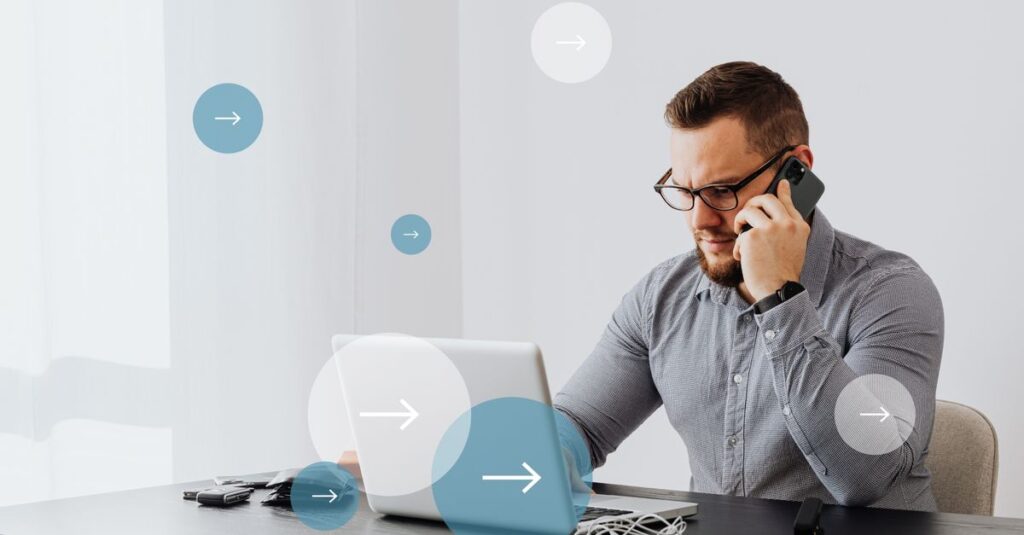
A prospective client calls during a team meeting. A patient calls while the front desk is helping someone in person. A property lead calls after hours and moves on when no one answers. These are not minor interruptions. They are moments when revenue, trust, and customer loyalty can leave the business. Learning how to reduce missed calls starts with treating every inbound call as an operational workflow, not a task for one overloaded person.
For many small and midsize businesses, the problem is not a lack of effort. It is a phone setup built for a single office, a single schedule, and a single person at a desk. Modern teams work across locations, mobile devices, calendars, CRM records, and shifting hours. Your call-handling process has to keep up.
Find out where calls are being lost
Before changing technology or staffing, establish a clear baseline. A missed call is not only a call that rings with no answer. It can also be a caller sent to voicemail without a prompt follow-up, transferred to an unavailable extension, or left waiting long enough to hang up.
Review call activity by hour, day, department, location, and source. The goal is to identify patterns instead of relying on anecdotes. If calls go unanswered from noon to 2 p.m., the issue may be lunch coverage. If they are missed after 5 p.m., it may be an after-hours policy. If one sales line has a high abandonment rate, the routing sequence may be too slow or too narrow.
Look for four signals: unanswered calls, abandoned calls, repeat callers, and voicemail messages without a documented response. CRM records, call analytics, and team feedback should tell the same story. When they do not, that is often evidence of disconnected systems or inconsistent processes.
Set a practical service standard as well. For example, define how quickly calls should be answered during business hours, who owns an abandoned-call callback, and how fast voicemail inquiries require a response. The right target depends on your industry. A legal intake team, medical office, or emergency repair business generally needs a faster response than a back-office supplier. What matters is that the expectation is visible and measurable.
How to reduce missed calls with smarter routing
The fastest way to improve answer rates is to stop sending every call to one extension. A cloud phone system can route a call through a sequence based on business hours, caller intent, department, location, or the availability of specific employees.
Start with a short, intentional path. A caller should not have to navigate a long menu only to reach an unanswered line. For a sales inquiry, ring the assigned representative first, then a small backup group, then a manager or shared queue. For customer support, send callers to the team best equipped to help, while allowing overflow to route to trained backup staff when wait times increase.
Ring groups are useful, but they need rules. Ringing ten people at once may improve the chance of an answer, yet it can create confusion, duplicate callbacks, and an uneven customer experience. Sequential or round-robin routing is often a better fit for teams that need clear ownership. Simultaneous ringing can work well for a small reception or intake group where speed is the priority.
Use presence status to keep routing decisions current. If an employee is in a meeting, on another call, or marked unavailable, the system should move to the next qualified person instead of allowing the caller to wait through unanswered rings. This is especially valuable for mobile and hybrid teams, where desk presence no longer reflects real availability.
Give callers reliable coverage after hours
After-hours calls are easy to dismiss as low priority, but many are high intent. A customer calling a home services company at 7 p.m. may need help now. A prospective client researching professional services after work may be ready to schedule. A message that simply says, “We are closed,” often ends the conversation before it begins.
Create a separate after-hours call flow. It should tell callers what help is available, provide a direct path for urgent issues, and capture details for the next business day. The flow must reflect your actual capacity. Promising immediate help when no one is monitoring the line damages trust faster than setting a clear expectation.
An AI Receptionist can provide 24/7 first response for businesses that receive routine questions, appointment requests, and basic routing needs outside staffed hours. It can answer common questions, qualify the reason for the call, schedule an appointment, or direct an urgent request to the appropriate on-call contact. For sensitive, complex, or emotional conversations, automation should hand off quickly to a person or collect concise information for prompt follow-up.
The best approach is not always full automation. A busy medical practice may use AI to handle appointment availability and office-hour questions, while ensuring clinical concerns reach a trained staff member. A real estate team may use it to capture property interest and schedule a showing, but keep negotiation conversations with the agent. Design coverage around the caller’s need, not the appeal of the technology.
Make mobile employees part of the answer plan
Customers should be able to reach your business whether the right employee is at a desk, visiting a client, or working from home. A business phone app gives employees a professional number and caller identity on their mobile devices, without requiring them to share personal numbers.
That only works when the team agrees on availability practices. Ask employees to update their presence, use do-not-disturb status during focused work, and set realistic call-forwarding rules. Managers should also define when calls are expected to be answered and when a shared queue or backup person takes over.
Avoid making every employee permanently reachable. Constant interruptions reduce productivity and can lead to rushed, poor-quality conversations. A stronger model protects focused work while giving callers a reliable route to someone available. Clear queues, scheduled coverage, and escalation rules make that possible.
Put customer context in front of the person answering
A fast answer is valuable. A fast answer from someone who understands the caller is better. When phone activity is isolated from your CRM, employees waste time asking for information the business already has, and follow-up details can disappear after the call.
Connect calling with the systems your team already uses. When a customer calls, the employee should be able to see relevant contact information, recent activity, ownership, and open requests. After the conversation, call notes, recordings where appropriate, summaries, and outcomes should be available to the people responsible for the next step.
This matters most during transfers and callbacks. If the original recipient is unavailable, the next person should not force the caller to start over. CRM synchronization and conversation summaries help preserve context, reduce handle time, and create accountability for the follow-up.
For sales teams, create a specific workflow for missed or abandoned calls. The record should be assigned, the callback attempt should be tracked, and the result should be visible. For service teams, tie the call to a ticket or customer record. The technology supports the process, but ownership is what prevents inquiries from becoming forgotten messages.
Build a recovery process for calls you still miss
Even well-run organizations will not answer every call live. The difference is how quickly and consistently they recover. Treat a missed call as a work item with an owner, a deadline, and a defined next action.
Voicemail transcription can help teams scan messages quickly, but it should not replace listening when tone or detail matters. Use notifications to alert the right person, then establish a callback window based on urgency. If a caller does not leave a message, call analytics can still identify the number and timing so your team can return the call when appropriate.
A short callback is often enough: acknowledge the attempt, identify the business and person calling back, and offer a useful next step. Do not wait until the end of the day to return every missed call in one batch. Response speed directly affects whether the caller still needs your help.
Review performance and refine the call flow
Call handling improves when leaders review it as regularly as sales activity, project delivery, or customer satisfaction. Watch answer rates, abandonment rates, average time to answer, callback completion, transfer patterns, and the hours when demand exceeds coverage.
Then make focused adjustments. Add a backup recipient to a frequently missed queue. Change an overly long greeting. Expand a high-performing team’s coverage window. Update an AI Receptionist’s answers when callers repeatedly ask the same question. Small changes can produce meaningful gains because they remove friction at the exact point where callers give up.
PrimeCall brings cloud calling, AI reception, team messaging, and CRM-connected workflows into one managed platform, helping teams respond with the context and coverage their customers expect.
Every missed call may not be recoverable, but every call can have a better path. Build that path around real customer behavior, give your team clear ownership, and make it easy for the next available person to help.